 Bin Aziz Pharmacy POS
DRAP's New 2D Barcode Rule: What Pakistani Pharmacies Should Do Now
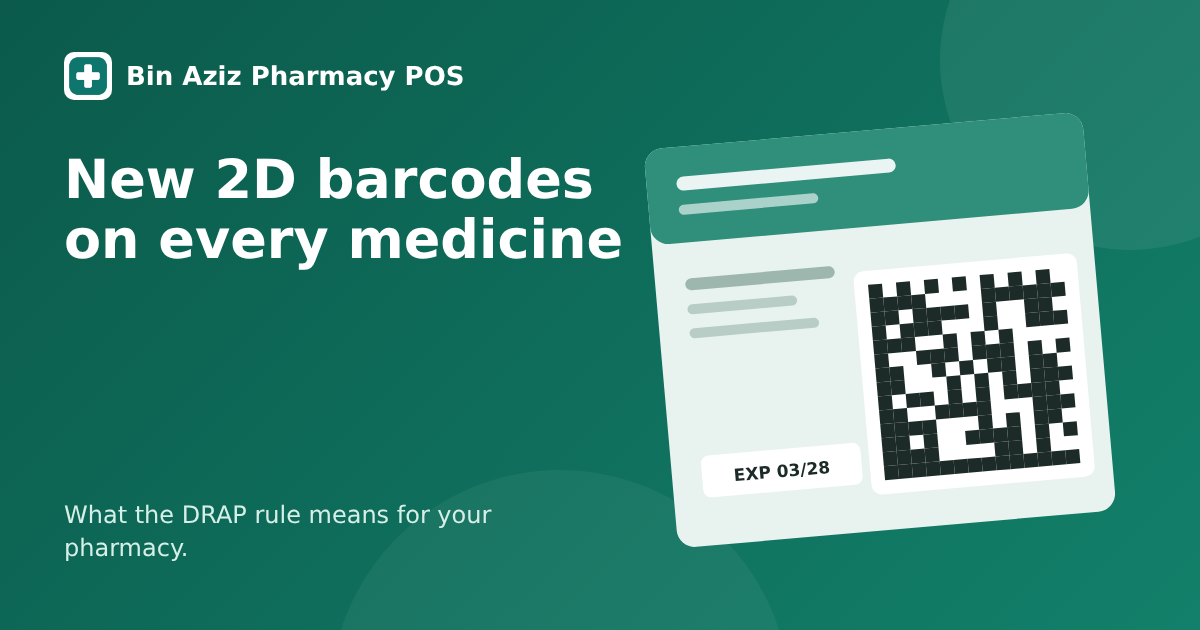
If you run a pharmacy in Pakistan, you will soon see a new square code on your medicine boxes. In October 2026 the Drug Regulatory Authority of Pakistan (DRAP) announced that medicines must carry a unique 2D barcode and serial number. The aim is to follow every pack from the factory to the patient and to keep fake and illegal medicines out of the market.
This post explains what the news reports say, what is still unclear, and what you can do now. We are not lawyers, and the rules can change, so always check the official DRAP notice before you act.
What has been announced
According to news reports of the notice, which amends the Drugs (Labelling and Packaging) Rules, 1978:
Medicines made in Pakistan or imported must carry a unique 2D Data Matrix barcode and a serial number. It is part of DRAP's Pharmaceutical Track and Trace System, which is being introduced in phases. It covers medicines for humans and animals. Some reports say products such as alternative medicines, nutraceuticals and medical devices are outside the first phase. Older batches are exempt. Batches made or imported before the start date may still be distributed and sold. Medicines that break the rule can face legal action.
Check the start date yourself
Reports do not agree on one date. One report says the rule applies to products made or imported on or after 9 October 2026. Another says medicines manufactured from 19 October 2026. The notice is listed as S.R.O. 963(I)/2026. Read it on the DRAP website or ask your distributor for a copy, and use the date it gives.
What is not yet clear
The reports we read do not say what a pharmacy must do. Nothing we found says that retailers must scan every pack or report to the system, and no penalties for shops were mentioned. Do not assume either way. Watch DRAP's announcements and your pharmacists' association for the next phase.
Why it matters to you even before the rules reach shops
Mixed shelves for months. Old batches without the code stay legal to sell, and new ones will have it. Your shelves will carry both for a long time. Trust. Customers worry about fake medicine. A pharmacy that knows exactly where each batch came from is easier to trust. Recalls. When a batch is recalled, you need to find it fast. Batch records make that a five-minute job instead of a day.
Five things to do this week
Read the notice. Get the DRAP text and note the start date and which products are covered. Tell your staff. The new square code is normal. Old boxes without it are still legal if they are from older batches, so do not refuse or return them by mistake. Talk to your suppliers. Ask which of their products already carry the code and when the rest will. Be careful with any medicine that arrives without the code after the start date, or from a seller you cannot identify. Check your scanner. Many cheap laser barcode scanners read only the old striped barcodes. A Data Matrix code needs a 2D imager scanner. If you plan to scan packs at the counter or on delivery, find out now what your scanner can read. Record the batch and expiry for every delivery. This is the habit that helps no matter how the rules develop. Write down the batch number, expiry date, quantity and supplier when stock arrives. Where software helps
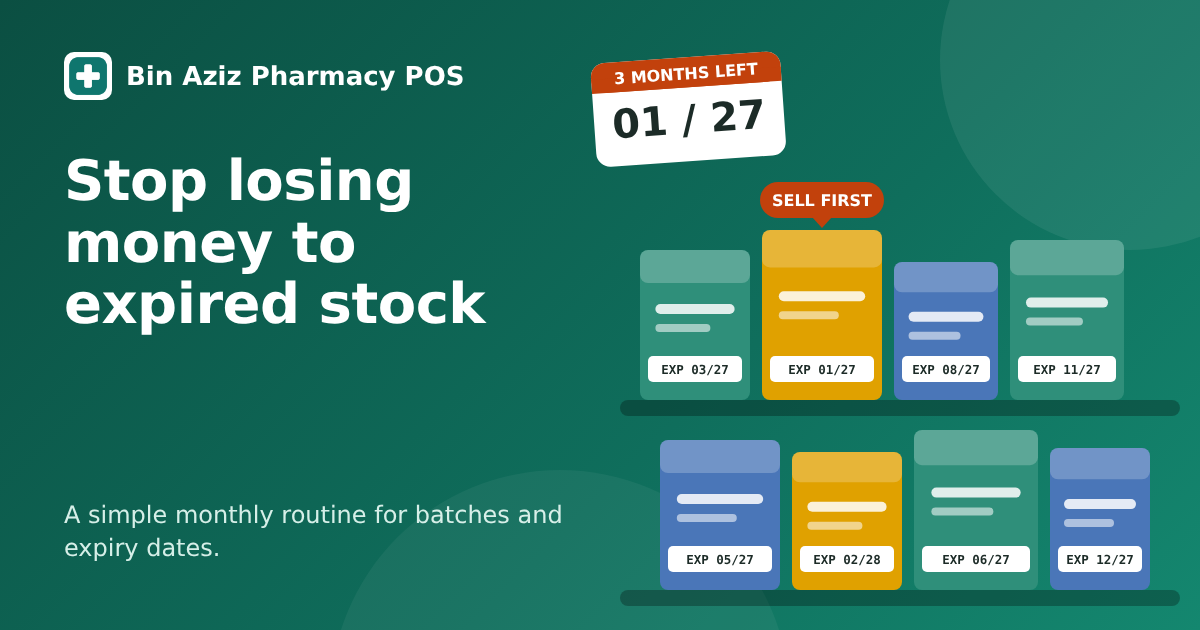
Good records are the base of any track and trace system. In Bin Aziz Pharmacy POS, every delivery is saved as a batch with its own expiry date, so you can see what you hold, which batch to sell first, and which batch to pull back if a supplier asks. Please note that the app does not connect to DRAP's system. It keeps your own records tidy so that you are ready for whatever comes next.
You can download the app for Windows with a free account, or see the pricing.
Quick checklist
- Get the official DRAP notice and note the date
- Brief your counter staff about the new code
- Ask every supplier about their rollout
- Check whether your scanner can read 2D codes
- Record batch and expiry on every delivery
Sources
Category: Pharmacy Regularities