 Bin Aziz Pharmacy POS
How to Track Medicine Expiry in Your Pharmacy (and Stop Losing Money)
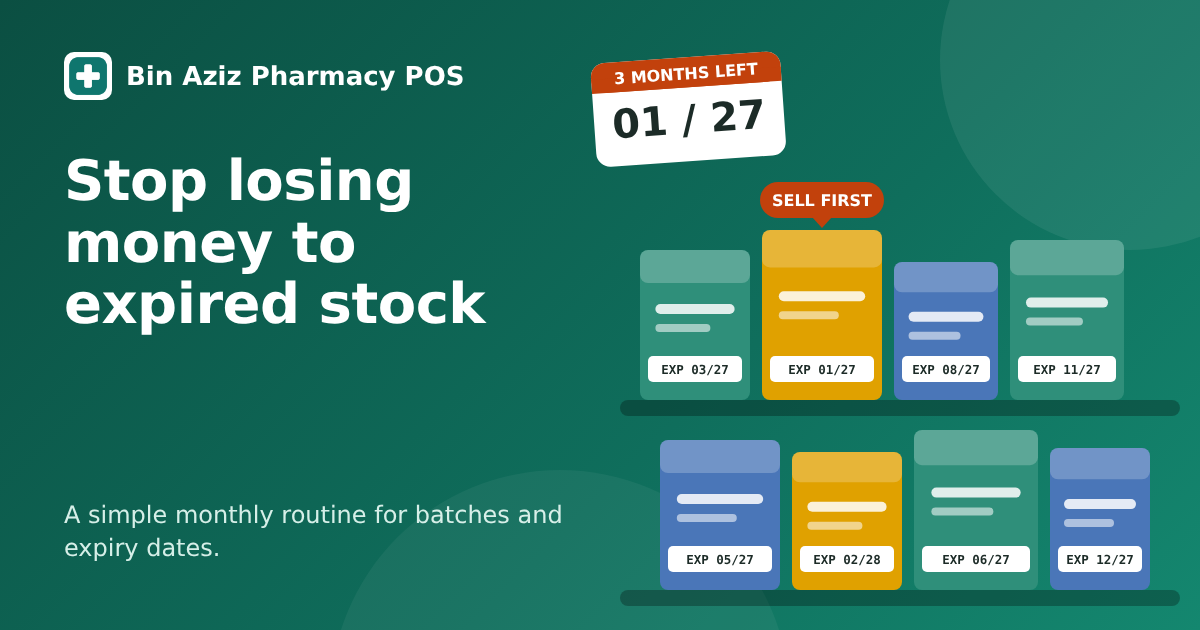
Every pharmacy owner has opened a drawer and found a box of medicine that expired months ago. It is not carelessness. When you stock hundreds of items from many suppliers, expiry dates are simply hard to keep in your head.
The good news is that expiry losses are mostly preventable. You do not need a big system, only a routine that you follow every month. This guide shows one that works for a small or medium pharmacy.
Why expiry is harder than it looks
The same medicine often sits on your shelf in two or three batches, each with its own expiry date. A strip of paracetamol bought in March and a strip bought in August look identical, but they do not expire together.
If your records only say "Paracetamol 500mg: 40 strips", you cannot tell which strips to sell first. That is how older stock gets pushed to the back and forgotten.
Step 1: Record the batch and expiry when stock arrives
The cheapest moment to catch an expiry problem is when the delivery is on your counter. For every item, write down:
the batch number the expiry date the quantity received the supplier
Also look at the date before you accept the goods. Medicines that arrive with very little shelf life left are a loss waiting to happen, so ask the supplier to replace them.
Step 2: Sell the oldest stock first
Arrange shelves so the earliest expiry sits in front and newer stock goes behind it. This is called FEFO, first expiry first out. It is different from "first in, first out" because a newer delivery can sometimes expire sooner than an older one.
Train your counter staff to pick from the front. A rule everyone follows is worth more than any tool.
Step 3: Do a monthly shelf check for the next three months
Once a month, look for every item that expires in the next three months. Three months is long enough to act and short enough to be a short list.
For each item you find, you have a few choices:
Move it to the front so it sells first. Offer it with a related purchase or tell staff to suggest it where it suits the customer. Return it to the supplier, if they accept near-expiry returns. Ask about this when you set up with a new supplier. Remove it from sale the day it expires, and keep it apart from good stock until you dispose of it properly.
Never sell expired medicine. It risks your customers' health and your license, and no discount is worth it.
Step 4: Order less of what moves slowly
Expiry losses usually come from over-ordering. If a medicine took five months to sell last time, do not order six months of it this time. Check what has really sold in the past few months before you reorder, and keep a smaller amount of slow items.
Step 5: Keep one clear record of write-offs
When you do have to remove expired stock, write down the item, batch, quantity and value. After a few months you will see which items and suppliers cause most of your losses. That tells you exactly where to order less or negotiate returns.
Where software helps
You can do all of this on paper, and many pharmacies start that way. The problem is time: checking batch dates on hundreds of items by hand every month is slow, and one missed page means one missed loss.
Pharmacy software that tracks batches does the checking for you. In Bin Aziz Pharmacy POS, each batch is recorded with its expiry date when stock comes in, and the dashboard shows expiring items so you can see them the moment you open it. You can read how it works on the inventory and expiry page, see everything the app does on the features page, or look at the guide to see the real screens.
If you want to try it, you can download the app for Windows with a free account, or see the pricing.
A simple checklist to start today Write batch and expiry for every delivery you receive from now on Put the earliest expiry at the front of every shelf Pick one day each month for the three-month expiry check Keep a written record of every write-off Order slow items in smaller amounts
Start with just the monthly check. It takes less than an hour, and it is the single habit that saves the most money.